


Colours, elaborate costumes, and masks bringing the calli and small squares to life: during the Venice Carnival, the city transforms into an open-air stage. The celebrations traditionally take place in the weeks leading up to Shrove Tuesday, with performances, parades, and festivities held throughout different areas of the city.
It is an opportunity to discover Venice in a unique atmosphere, surrounded by centuries-old traditions, craftsmanship, and views that seem to belong to another era. If you are thinking of visiting during Carnival, here is what you need to know about its history, the most famous masks, and the events you should not miss.
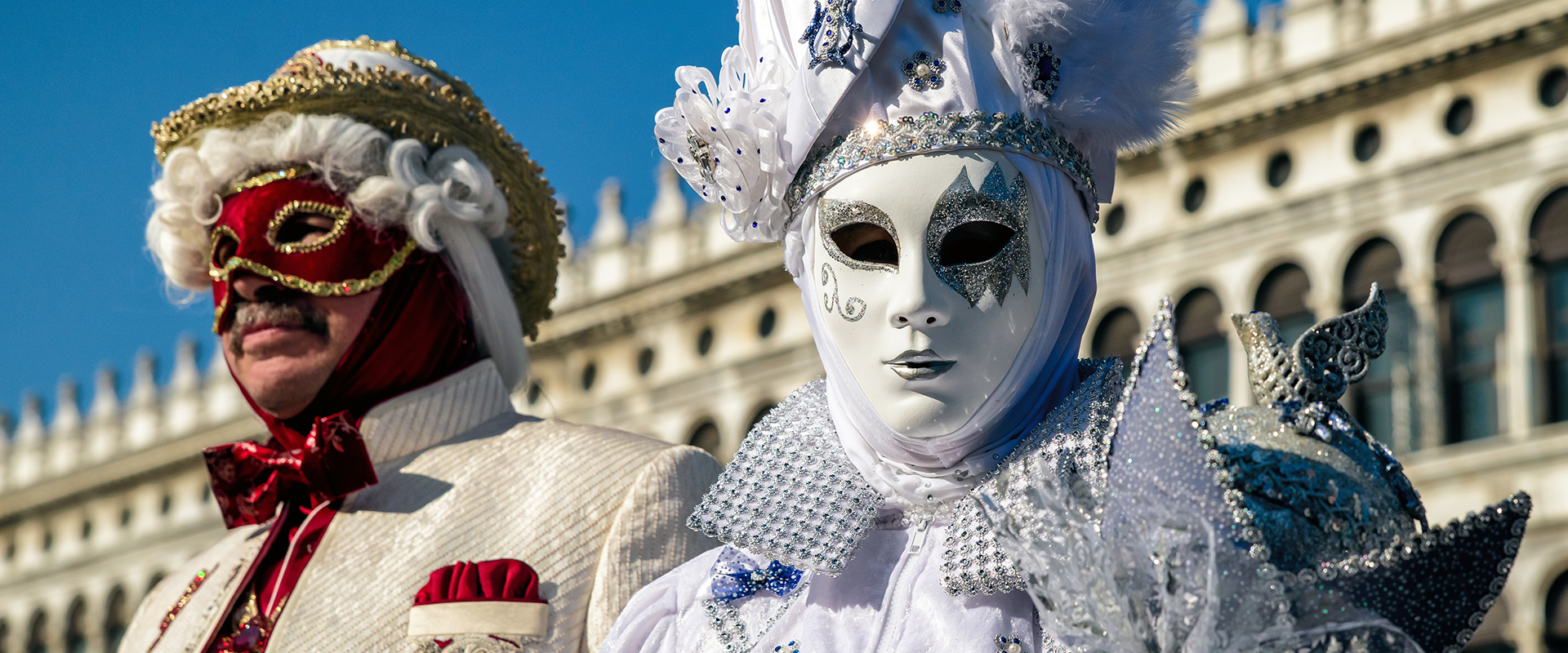
The History of the Venice Carnival
The origins of the Venetian Carnival date back to the Middle Ages. One of the earliest official records dates to 1296, when the Senate of the Republic of Venice declared the day before Lent a public holiday.
Over the centuries, Carnival became a festive occasion during which masks allowed people to temporarily set aside social distinctions and experience the city with greater freedom. Through public celebrations, performances, and dances, the festival developed an identity increasingly associated with elegance and mystery.
After a long period of interruption, Carnival returned in its modern form in 1979, gradually reviving Venetian traditions and establishing itself as one of the city’s best-known events.
Venice Carnival Events
The programme changes every year and includes events in different parts of the city, from outdoor performances and historical traditions to masquerade parties. Some of the best-known events include:
· Flight of the Angel: one of the most spectacular events in St. Mark’s Square, during which a figure descends from the bell tower towards the square.
· Festa delle Marie: this event commemorates a Venetian tradition associated with the celebration of twelve young women, with a programme that highlights the city’s history and traditional costumes.
· Parades and performances: squares and small Venetian squares host activities, performances, and opportunities to admire Carnival costumes.
· Masquerade parties and balls: some private residences and historic palaces organize events that recreate the elegance and atmosphere of Venetian celebrations of the past.
To find out the dates, times, and participation requirements, consult the official programme for the current edition, as events may vary from year to year.
Tips for Experiencing the Venice Carnival
The Carnival period changes every year depending on the date of Easter. The days closest to Shrove Tuesday are generally among the busiest, while the first days of the celebrations may offer opportunities to stroll around and admire the costumes at a more relaxed pace.
To enjoy the events without rushing, plan your journeys around the programme and bear in mind that the most famous areas, such as St. Mark’s Square, can become very crowded. If you want to attend a masquerade ball or private party, check the admission requirements and whether advance booking is necessary.
Carnival is also an opportunity to explore Venice beyond the main events: wander through the narrow streets, discover artisan workshops, and stop at a traditional bacaro to sample local specialities. If you would like to wear a mask or costume, look for an artisan workshop and discover a tradition that continues to be passed down through generations in the city.
Interesting Facts About the Venice Carnival
Did you know that Venetian masks were not used exclusively during Carnival in the past? At certain times and in specific circumstances, their use was regulated and could also be permitted on other occasions. Precisely because masks allowed people to conceal their identities, restrictions were introduced throughout history to prevent abuses.
Another interesting fact concerns the Moretta, also known as the mute servant: the small mask was held in place by a button that the wearer had to grip between their teeth, preventing them from speaking. This unusual feature makes it different from many other Carnival mask traditions.
Staying in Venice During Carnival
Carnival can be the perfect opportunity to spend a few days discovering the city. Beyond the events, you can visit museums, explore the different districts, and discover a side of Venice filled with artisan shops, traditional bacari, and less crowded corners.
Since the festival attracts large numbers of visitors, it is advisable to book your accommodation in advance, especially if you plan to stay during the days closest to Shrove Tuesday. Planning your trip ahead of time allows you to choose the most suitable area and organize your days around the events you want to attend.
Where to Stay During the Venice Carnival
The Sarlux apartments, located in different districts of Venice’s historic centre, are an option for those who want to experience the city independently and have a convenient base from which to explore Venice during Carnival.
Whether you are travelling as a couple, with family, or with friends, you can choose the accommodation that best suits your itinerary and enjoy the city beyond the main events.
Discover the Sarlux apartments and plan your stay in Venice during Carnival.